










Cardiac Calcium ScoringWhat's Your Cardiac Score?A revolutionary advance in detecting heart disease. Facts about heart disease:
What are the risk factors for heart disease?The risk factors for heart disease include the following:
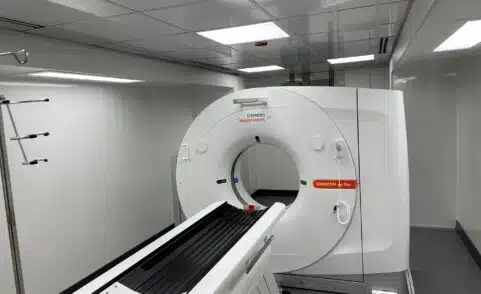
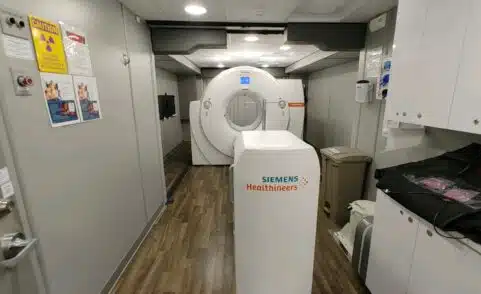
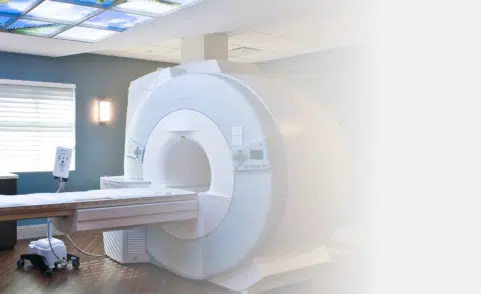
What causes heart disease?The primary cause of heart disease is the build-up of plaque (atherosclerosis) in the arteries of the heart. This build-up can cause the arteries to narrow. Plaque can also break away from the artery walls and cause a blockage. In both instances the heart muscle does not receive enough blood flow and oxygen-thus a heart attack can occur. What is cardiac scoring?Cardiac scoring is a revolutionary, pain-free, non-invasive and inexpensive procedure requiring less than 10 minutes. Using CT imaging with sub-second scanning capability, the equipment takes 70-90 images of your coronary arteries without any injections, needles or removal of your clothing. The amount of calcium or plaque detected in your coronary arteries is used to establish your cardiac score.
What does the procedure involve?First, you complete a brief risk factor questionnaire. Next, you lie down on the imaging table while a CT technologist places a few EKG leads on you. You are then asked to hold your breath while the images are taken. That's it. You can return to your regular routine. A board certified radiologist, using high tech software, calculates your cardiac score based on the images taken. He or she provides an evaluation of the results within 48 hours.
Is cardiac scoring safe?The radiation exposure during cardiac scoring is very minimal (comparable to the radiation received during a chest x-ray). No intravenous injections or needles are required. Not only is it safe, but it is also simple. In most cases (unless there are certain types of buttons or bra metal involved),, patients may keep their shirt or blouse on during the procedure. What can my cardiac score tell me and my doctor?Subtle early warning signs of heart disease can be detected. Cardiac scoring is the latest diagnostic tool to detect plaque in the coronary arteries. With this information, your doctor can recommend the appropriate treatment, including diet and lifestyle changes, medication and/or further testing. Is coronary artery disease treatable?Yes, the plaque build-up process can be slowed, stabilized and reversed, in some cases, through aggressive lifestyle modification and/or through medication therapies under the guidance of your physician. What are the general recommendations for interpretation of calcium scores?
How does my score compare with others in my age group? Coronary Artery Calcium Scores
|
|||||||||||||||||||||||||||||||||||||||||||||||||||||||||||||||||||||||||||||||||||||||||||||||||||||||||||||||||||||||||||||||||||||||||||||||||||||||||
|
AGE |
||||||
40-45 |
46-50 |
51-55 |
56-60 |
61-65 |
66-70 |
70 + |
|
PERCENTILE |
|
|
|
|
|
|
|
MEN |
|
|
|
|
|
|
|
10% |
0 |
0 |
0 |
1 |
1 |
3 |
3 |
25% |
0.5 |
1 |
2 |
5 |
12 |
30 |
65 |
50% |
2 |
3 |
15 |
54 |
117 |
166 |
350 |
75% |
11 |
36 |
110 |
229 |
386 |
538 |
844 |
90% |
69 |
151 |
346 |
588 |
933 |
1151 |
1650 |
WOMEN |
|
|
|
|
|
|
|
10% |
0 |
0 |
0 |
0 |
0 |
0 |
0 |
25% |
0.1 |
0.1 |
0.1 |
0.2 |
0.5 |
1 |
4 |
50% |
0.1 |
0.1 |
1 |
1 |
3 |
25 |
51 |
75% |
1 |
2 |
6 |
22 |
68 |
148 |
231 |
90% |
3 |
21 |
61 |
127 |
208 |
327 |
698 |
*From University of Illinois database of self-referred patients
Test |
Advantages |
Disadvantages |
| Stress Test | Ideal for patients who are symptomatic Used to determine extent of ischemia |
Does not produce an image of coronary arteries Significant blockage must be present to detect ischemia (i.e. does not detect preclinical disease) |
| Angiography | "Gold standard" Shows narrowing of lumen Shows number of diseased vessels |
Generally used only with demonstrable ischemia Invasive Expensive No information regarding type of plaque (soft or hard) |
| Intravascular Ultrasound | Direct visualization of vessel wall and lumen size; useful for angioplasty and stent placement Can detect calcification |
Generally used only with demonstrable ischemia Invasive Expensive |
Helical/EBCT Cardiac Score |
Noninvasive Detects and quantifies coronary calcification May be used in asymptomatic patients May be used to estimate total atherosclerotic plaque burden and risk of future events |
Does not identify stenotic lesions Conflicting evidence regarding correlation of CAC score to risk of events No universally defined treatment plans for those with positive test results |
Download Scheduling order form
Make An Appointment
Diagnostic Center of America Home